Why Are Educational Toys Effective What Factors Matter?

Time:2026-10-09 Author:Madeline
0%

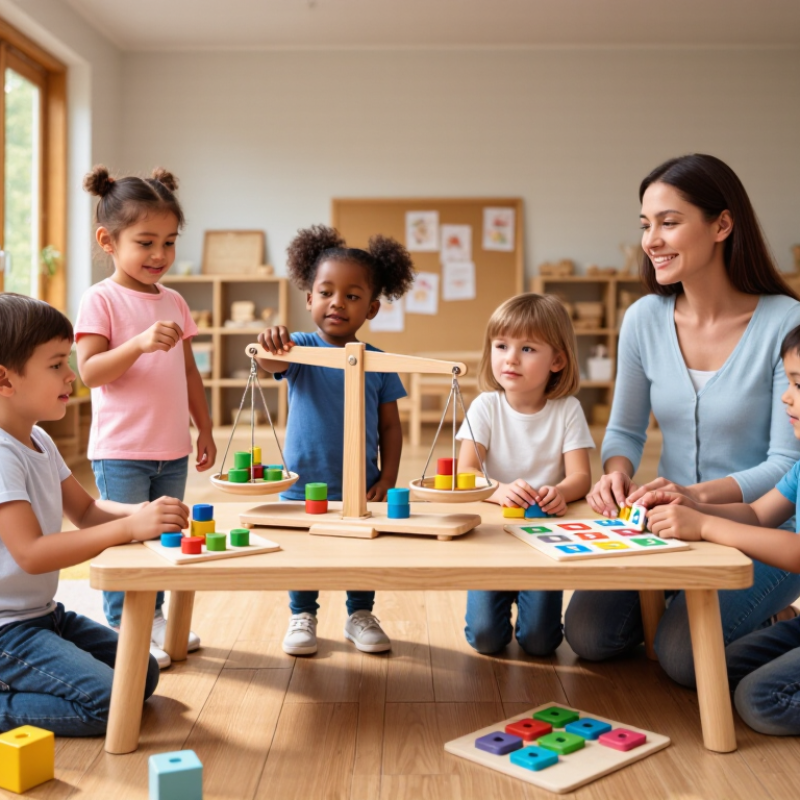
Educational toys promise more than bright colors and cheerful packaging. Their real value appears when a child builds, tests, changes, and tries again. A wooden balance set may teach early mathematics through weight, height, and movement. A phonics game may support language when children hear sounds and connect them with letters. However, the toy alone does not guarantee learning. The child’s age, interests, abilities, play setting, and adult guidance all shape the experience.

To understand what factors influence educational toy effectiveness, researchers examine purposeful design, developmental appropriateness, feedback, and opportunities for active problem-solving. Kathy Hirsh-Pasek, a developmental psychologist and leading play researcher, has stated, “Play is not the opposite of learning; it is the way children learn.” Her observation reflects a practical truth: children often learn more when they control the activity instead of following endless instructions. A toy with adjustable pieces can invite experimentation. A toy with one correct response may limit it.

Evidence also depends on observation, not marketing language. Does the child explain a choice? Can the skill appear again without the toy? Does the activity remain engaging after five minutes? These questions matter in classrooms, homes, and therapy settings. They also expose a weakness in many product claims. No checklist can predict every child’s response. A carefully designed toy may still confuse, bore, or overwhelm someone. This introduction explores the major factors behind educational toy effectiveness, while recognizing that meaningful learning often depends on the relationship between the child, the toy, and the person nearby.
Why Are Educational Toys Effective What Factors Matter?

What Educational Toys Are and How They Support Learning

Educational toys are play materials designed to build specific skills while children explore, create, and solve problems. They may support early language, fine motor control, memory, counting, spatial awareness, or social communication. A simple puzzle can strengthen hand control and patience. Building pieces can turn a living-room floor into a small design studio.

The strongest learning often happens through active use, not passive watching. Children test ideas, make mistakes, and try again. An adult can ask, “What could fit here?” instead of giving the answer. This small pause encourages reasoning and confidence.

I have seen children use sorting objects to invent their own rules, which can reveal deeper thinking than a worksheet. Their rules may be imperfect. That is useful information, not failure.

Age and ability matter. A toy should offer a manageable challenge without creating constant frustration. Open-ended materials often support more creativity because they allow several solutions. Clear feedback also helps children understand cause and effect, such as a balance scale tipping after one side becomes heavier. Safe materials, comfortable sizes, and simple instructions make exploration easier. Yet no toy teaches by itself. Adult attention, conversation, and time remain important. Sometimes an ordinary box inspires more learning than an expensive activity set. The best choice depends on the child, the goal, and the moment.

How Educational Toys Develop Cognitive and Problem-Solving Skills

Educational toys can turn abstract thinking into something a child can touch. A shape puzzle, counting set, or building challenge gives the brain clear evidence. When a piece fails, children compare sizes, rotate objects, and test another choice. This repeated practice strengthens visual reasoning and working memory. It also makes problem-solving feel less like a worksheet. Children often stay engaged longer when progress is visible.

The strongest learning appears when play has a small amount of challenge. An easy task may build confidence, but it rarely stretches flexible thinking. A difficult task can cause frustration, especially without patient adult guidance. In my observation, simple prompts work better than quick answers: “What could you try now?” or “Why did that tower fall?” Such questions encourage children to explain decisions, predict outcomes, and notice patterns. Hands-on play also supports language development, because children describe shapes, sequences, and solutions while working.

Not every educational toy produces meaningful learning. The label may promise a lot. The child’s interest, age, and play environment matter more. Quiet children may solve problems through careful observation, while active children may learn through movement. Adults should watch without taking control, then adjust the challenge gently. Mistakes are useful, though not always enjoyable. A toy can also become repetitive, and that is a weakness worth noticing. Rotating activities and inviting open-ended designs can keep thinking active without turning play into a test.

The Role of Play in Language, Social, and Emotional Growth

Educational toys are effective when they invite children to speak, cooperate, and manage feelings through play. A block becomes a bridge. A puppet becomes a worried friend. These small scenes make abstract skills visible and repeatable. UNICEF’s Learning through Play report (2018) describes play as active, engaging, social, and meaningful learning. The Lancet’s 2016 early-childhood series estimated that 250 million children under five faced risks to their developmental potential. That figure makes everyday interaction matter, not just expensive materials.

In practice, an adult’s response often matters more than the toy. When a child says, “The bear is lonely,” ask, “What could help?” This extends vocabulary, perspective-taking, and emotional labeling. Turn-taking games also teach waiting, negotiation, and repair after conflict. The World Health Organization reports that one in seven adolescents aged 10–19 experiences a mental health condition. Early emotional language cannot solve everything, but it can create useful habits. I sometimes expect too much from a clever toy. A toy can be ignored, misused, or simply boring. That is useful feedback, not failure.

Tips: Choose open-ended toys with more than one possible answer. Offer ten quiet minutes, then follow the child’s idea. Name feelings without correcting them. Use prompts such as “Tell me more” and “Can we try together?” Keep screens and instructions secondary. Observe one detail: Did the child speak, share, or recover? If not, change the activity, not the child.

Which Design Factors Make Educational Toys Effective

Educational toys work best when design turns play into purposeful discovery. The strongest designs match a child’s developmental stage, not only an age label. A puzzle should offer a reachable challenge, with pieces that feel manageable in small hands. Clear feedback matters too. A soft click, visible change, or gentle correction helps children connect actions with results. Evidence-informed design also follows child-development principles and appropriate safety requirements. However, noisy lights can distract more than they teach. More stimulation is not always better.

Open-ended design supports imagination and repeated use. Children might sort shapes today, invent a shop tomorrow, and explain patterns later. Materials should be durable, smooth, washable, and free from detachable hazards. Good design also considers children with different motor, visual, auditory, and language abilities. Simple symbols, varied textures, and adjustable difficulty can widen participation. In my observations of play sessions, children often abandon toys when instructions dominate. They learn more when adults ask questions instead of correcting every move. Still, this factor is easy to overstate. Independent play does not make every toy educational.

Tips: Watch what children actually do, not only what packaging claims. Test one learning goal at a time. Remove decorative features that compete with the task. Check whether children can recover from mistakes without adult rescue. Ask educators and caregivers for feedback. Revisit the design after real play, because a clever prototype may fail on a carpet, at bedtime, or in a crowded classroom.

How Age, Safety, and Learning Goals Guide Toy Selection

Why Are Educational Toys Effective? What Factors Matter?

Age should guide every toy decision. A three-year-old needs chunky pieces, clear shapes, and simple cause-and-effect actions. A nine-year-old may need rules, planning, and several possible solutions. The American Academy of Pediatrics recommends choosing toys that encourage imagination, movement, and shared interaction. UNICEF’s Learning through Play report also identifies active engagement, meaningfulness, social interaction, and iteration as important learning conditions. These ideas matter more than a toy’s “educational” label.

Safety comes before skill development. The U.S. Consumer Product Safety Commission reported an estimated 145,500 toy-related injuries among children under 15 treated in emergency departments in 2022. Check age warnings, loose parts, sharp edges, accessible button batteries, and strong magnets. Watch how the child actually plays. A suitable toy can become risky when used differently. Labels help, but they cannot replace supervision.

Learning goals should remain specific. For fine-motor practice, observe whether a child can grasp, twist, thread, or stack. For early language, choose toys that invite naming, storytelling, and conversation. For problem-solving, select materials with more than one solution. I once chose a complex construction set for a child who needed easier successes. The toy looked impressive, but frustration arrived quickly. That choice was not entirely right. Professional selection still requires observation, adjustment, and occasional doubt.

Why Are Educational Toys Effective What Factors Matter? - How Age, Safety, and Learning Goals Guide Toy Selection

Educational toy selection framework based on developmental stage, safety requirements, and observable learning goals.
Age Range Primary Developmental Needs Suitable Toy Features Learning Goals Key Safety Checks Observable Indicators of Progress Recommended Adult Support
0–12 months Sensory exploration, visual tracking, grasping, reaching, and early cause-and-effect discovery. High-contrast patterns, easy-to-grasp surfaces, soft textures, simple rattles, and toys that respond to gentle movement. Build visual attention, hand control, sensory awareness, and early object exploration. Avoid small detachable parts, long cords, sharp edges, loose batteries, and accessible magnets. Use toys that are large enough not to block the airway. The child reaches toward objects, transfers objects between hands, tracks movement, and repeats actions to produce an effect. Stay nearby, offer one toy at a time, and allow the child to explore without forcing a particular result.
1–2 years Walking and hand coordination, imitation, early language, object permanence, and simple problem-solving. Large stacking pieces, nesting containers, push-and-pull toys, chunky puzzles, picture cards, and simple pretend-play objects. Strengthen coordination, vocabulary, sequencing, matching, and understanding of simple actions and consequences. Choose oversized pieces with no easily removable components. Check that wheels, hinges, and handles are firmly attached and that surfaces are non-toxic and washable. The child stacks objects, matches familiar pictures, follows one-step directions, and uses gestures or words to request help. Name objects and actions, demonstrate briefly, and use short prompts such as “Where does this go?”
2–3 years Expanding language, fine-motor control, symbolic thinking, categorization, and growing independence. Large interlocking construction pieces, shape sorters, simple matching games, washable art materials, and role-play sets without small parts. Develop color and shape recognition, early counting, communication, planning, and pretend-play skills. Avoid toys containing small parts that may present a choking risk. Inspect for breakage, peeling coatings, exposed fasteners, and accessible button batteries. The child groups objects by a visible feature, completes simple puzzles, uses short sentences, and follows two related instructions. Encourage the child to describe choices, model turn-taking, and provide limited choices rather than completing the task for them.
3–5 years Imagination, self-regulation, early mathematical reasoning, language development, and cooperative play. Pretend-play props, building systems, pattern cards, beginner board games, drawing tools, counting manipulatives, and simple science activities. Support storytelling, counting, classification, pattern recognition, fine-motor precision, and social problem-solving. Follow the stated age guidance, supervise art and science materials, and keep small components, strong magnets, and button batteries away from younger children. The child creates a multi-step story, recognizes simple patterns, counts objects with increasing accuracy, and negotiates basic play rules. Ask open-ended questions, introduce new vocabulary, and let children test ideas before offering solutions.
5–7 years Reading readiness, logical reasoning, sustained attention, motor planning, and understanding of rules. Word games, number puzzles, construction challenges, beginner coding logic activities, strategy games, and measuring or sorting tools. Practice phonics, arithmetic concepts, sequencing, planning, spatial reasoning, and persistence through manageable challenges. Check for age-appropriate complexity, secure electrical compartments, safe tool dimensions, and clear instructions. Supervise activities involving heat, chemicals, or sharp tools. The child explains a strategy, reads or identifies common words, solves age-appropriate problems, and revises a design after failure. Encourage explanation rather than speed, break complex tasks into steps, and praise effort and revision.
7–9 years Abstract thinking, independent learning, collaboration, creativity, and more advanced problem-solving. Multi-step construction kits, strategy games, classification activities, model-making materials, logic puzzles, and introductory experiment sets. Develop hypothesis formation, planning, data interpretation, spatial reasoning, and collaborative decision-making. Review warnings and supervision requirements. Use protective equipment when applicable and keep tiny components, magnets, and chemical substances controlled. The child records observations, compares possible solutions, explains cause and effect, and works within agreed rules with peers. Invite the child to plan, predict, test, and explain results. Provide guidance without removing productive challenge.
9–12 years Complex reasoning, creativity, self-directed projects, technical understanding, and longer-term goal setting. Advanced building challenges, design projects, strategy games, coding logic, measurement activities, and research-based science materials. Strengthen systems thinking, mathematical reasoning, communication, project management, and evidence-based decision-making. Confirm that tools, electrical parts, batteries, and experiment materials are suitable for the child’s experience level. Provide direct supervision for higher-risk activities. The child defines a goal, develops a plan, evaluates evidence, documents changes, and communicates the final reasoning or result. Act as a coach, help set realistic milestones, and encourage independent troubleshooting and reflection.
All ages Motivation, accessibility, cultural relevance, physical suitability, and opportunities for repeated practice. Open-ended play, adjustable difficulty, clear feedback, multiple ways to use the toy, and compatibility with the child’s interests and abilities. Connect play with meaningful practice while supporting autonomy, curiosity, communication, and transferable skills. Follow the manufacturer’s age guidance and safety instructions, inspect toys regularly, remove damaged items, and store batteries and small parts securely. The child chooses to return to the activity, remains engaged, applies a learned idea in a new context, and can describe what was learned. Match challenge to ability, observe without interrupting unnecessarily, and adapt materials for sensory, motor, language, or learning needs.

Safety guidance should always be checked against the toy’s current instructions and the applicable child-product regulations in the country of use.

FAQS

What are educational toys designed to support?

Educational toys build skills through play, including language, counting, memory, fine motor control, and spatial awareness. A puzzle can strengthen hand control and patience.

How does active play support learning?

Children test ideas, make mistakes, and try again. This process supports reasoning and confidence. The learning is sometimes messy.

How can adults help without taking over?

Ask questions such as, “What could fit here?” Give the child time before offering an answer. A quiet pause can encourage independent thinking.

Should educational toys match a child’s age?

Age and ability both matter. Choose a manageable challenge that avoids constant frustration. A toy that is too easy may quickly become boring.

Why are open-ended toys useful?

Open-ended toys allow several solutions. Building pieces might become a bridge today and a shop tomorrow. Children can invent their own rules.

How can toys support language and emotional development?

Pretend play gives feelings and relationships a visible form. A puppet can become a worried friend. Ask, “What could help?” to encourage emotional vocabulary.

What design features make a toy effective?

Clear feedback helps children connect actions with results. A soft click, visible change, or gentle correction can show cause and effect.

Are flashing lights and loud sounds necessary?

No. Extra stimulation can distract from the learning goal. Simpler designs may work better, though this depends on the child.

What safety and accessibility features should caregivers check?

Look for smooth, washable materials and comfortable sizes. Avoid detachable hazards. Varied textures, simple symbols, and adjustable difficulty can support wider participation.

How can caregivers know whether a toy is actually helping?

Watch the child’s actions, not only the packaging. Notice whether the child speaks, shares, solves, or recovers after mistakes. If not, change the activity, not the child.

Conclusion

Educational toys are play materials designed to make learning active, meaningful, and enjoyable. They support children by encouraging curiosity, exploration, and hands-on discovery while helping them build cognitive and problem-solving skills. Through activities such as matching, building, sorting, and experimenting, children can practice memory, reasoning, concentration, creativity, and decision-making. Play also creates valuable opportunities for language development, cooperation, communication, emotional expression, and learning how to manage challenges with others.

The effectiveness of an educational toy depends on several connected elements. Key design features include clear goals, age-appropriate difficulty, opportunities for independent exploration, useful feedback, and flexibility that allows children to play in different ways. Understanding what factors influence educational toy effectiveness also requires considering a child’s developmental stage, interests, abilities, and learning needs. Safety, durability, and suitable materials are equally important. By selecting toys that match both age and learning goals, caregivers can provide engaging experiences that support balanced intellectual, social, emotional, and practical growth.

Madeline

Madeline

Madeline is a dedicated marketing professional with a wealth of expertise in our company's core offerings. With a keen understanding of the industry, she brings a unique perspective to her role, consistently delivering high-quality content that highlights the superior aspects of our products. As......