How to Evaluate the Quality of Educational Toys in 2026?
Choosing an educational toy now requires more than reading “STEM” or “Montessori” on the package. Parents, teachers, and buyers should ask how to evaluate the quality of educational toys through evidence, observation, and practical use. A high-quality toy should match the child’s age, abilities, interests, and learning goals. It should also invite active thinking, communication, movement, or problem-solving.
Dr. Kathy Hirsh-Pasek, a developmental psychologist and leading play researcher, offers a useful principle: “The best toys are 10 percent toy and 90 percent child.” This idea shifts attention from flashy features to the child’s experience. Can a child build several structures with the same blocks? Can two children negotiate rules during a board game? Does a puzzle remain challenging without causing frustration? These details matter.
Quality also includes safe materials, strong construction, readable instructions, and responsible design. Check for loose parts, sharp edges, weak hinges, unclear age guidance, and claims without supporting evidence. A toy should survive repeated handling, not only look attractive in a product photograph. Still, no evaluation method is perfect. A toy that supports one child’s language development may bore another child within minutes. Personal bias can also affect judgment. Real-world testing helps, but even careful reviewers may overlook accessibility or cultural relevance. The most reliable evaluation combines expert knowledge, manufacturer transparency, caregiver experience, and direct observation of children at play.
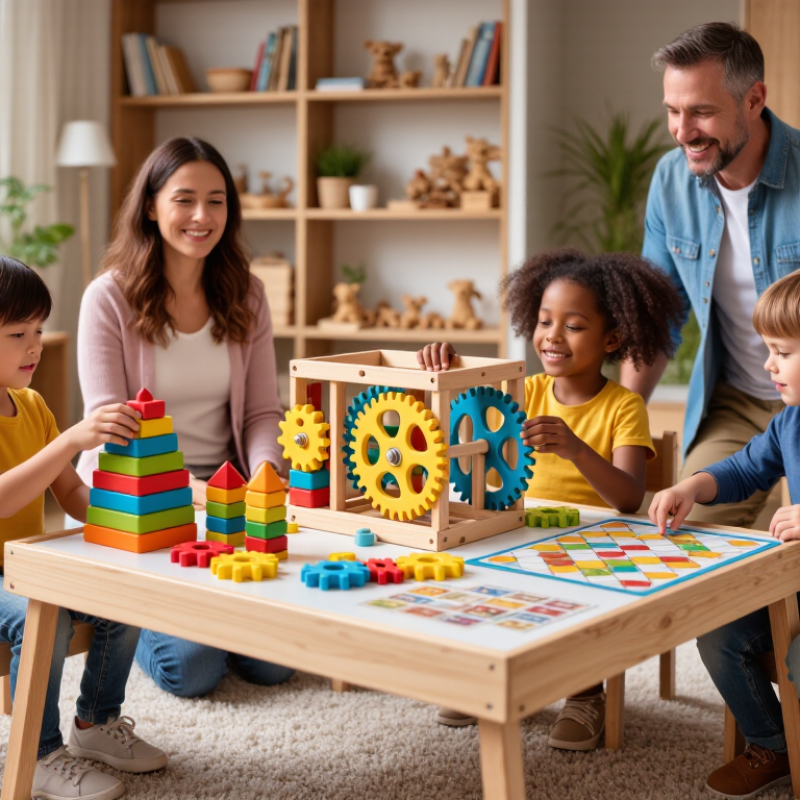
Quality in an educational toy begins with safe, purposeful learning. The U.S. Consumer Product Safety Commission estimated about 231,000 toy-related emergency department injuries among children under 15 in 2023. That figure makes safety more than a checklist. Check secure parts, smooth edges, readable age guidance, and durable materials. Compliance with ASTM F963 or ISO 8124 supports safer design, but it does not guarantee meaningful learning.
A quality toy should invite children to test ideas, make mistakes, and try again. It needs a clear developmental purpose, not merely bright colors or academic labels. Circana’s 2023 global toy report recorded a 7% dollar-sales decline across 12 major markets. That pressure can encourage cheaper construction. In my own evaluations, I have sometimes confused weight with durability. A heavier toy may still crack, while a simple one may survive daily use.
Tips: Watch a child play for ten minutes. Can the toy support more than one solution? Are instructions understandable without adult rescue? Check whether pieces remain useful after the novelty fades. Avoid toys that promise advanced skills without evidence. A short trial often reveals more than packaging.
Evaluating Educational Toy Quality in 2026 means looking beyond bright colors and clever learning claims. Safety begins with the intended age range, clear instructions, and realistic supervision needs. Check edges, hinges, magnets, cords, and detachable pieces by hand. Nothing should crack, pinch, shed, or become loose during ordinary play. Look closely. A toy that feels unusually sharp or unstable deserves a pause.
Materials deserve equal attention. Ask whether surfaces are non-toxic, odor-free, and easy to clean, especially for younger children. Wood should feel smooth, not splintery. Plastic should resist bending without producing flakes or a harsh chemical smell. Fabric should have secure stitching and washable, colorfast surfaces. I once trusted a thick coating because it looked durable; repeated cleaning revealed a small peel. That mistake changed my inspection habits. Appearance is only evidence, not proof.
Construction shows how a toy will age. Test buttons repeatedly, rotate joints, and inspect screws, seams, and battery compartments. Accessible batteries need secure closures, and small parts require careful age-based judgment. Review independent test reports when available, including the testing method and measured hazards. Expert claims should connect to specific evidence. No product is flawless. A thoughtful evaluator records defects, retests after cleaning, and watches how children actually use the toy. Real play can expose weaknesses that a showroom inspection misses.
| Evaluation Dimension | What to Inspect | Reliable Quality Indicator | Recommended Evidence | Assessment |
|---|---|---|---|---|
| Applicable Safety Standard | Check whether the toy is designed and tested for the market where it will be sold. | Documentation identifies applicable requirements such as ASTM F963, EN 71, or ISO 8124, as appropriate to the destination market and product type. | Current conformity documentation, technical file, and test reports from a competent laboratory. | Pass when documented |
| Age Appropriateness | Compare the stated age range with the toy's complexity, force requirements, moving parts, and foreseeable use. | The recommended age is supported by a documented risk assessment and matches the child's developmental abilities. | Age-grade rationale, user instructions, warnings, and supervised-use guidance where relevant. | Pass / Review |
| Small Parts and Choking Risk | Look for detachable pieces, removable caps, beads, magnets, batteries, and components that could become loose after use or impact. | No accessible hazardous small parts for the intended age group; detachable components remain secure during reasonably foreseeable use. | Small-parts test results, abuse-test records, magnet information, and battery-compartment inspection. | Critical checkpoint |
| Edges, Points, and Pinch Areas | Run a visual and tactile inspection over handles, seams, cut-outs, hinges, gears, and exposed fasteners. | No accessible sharp edges or points; moving mechanisms do not create avoidable finger-trap or pinch hazards. | Production inspection records and mechanical safety test results. | Pass / Fail |
| Material Composition | Identify plastics, coatings, adhesives, textiles, wood finishes, metals, batteries, and electronic components. | Materials are suitable for children's products, are traceable to approved specifications, and meet applicable chemical restrictions. | Material declarations, supplier specifications, restricted-substance test reports, and batch traceability. | Pass when verified |
| Paints, Coatings, and Surface Finish | Check for peeling, flaking, strong odors, color transfer, and coating damage after rubbing or repeated handling. | Coatings remain adhered during normal use and do not create accessible flakes, splinters, or unacceptable chemical exposure. | Coating adhesion and migration testing, visual inspection, and chemical compliance records. | Pass / Review odor |
| Structural Strength | Inspect joints, wheels, handles, lids, strings, tracks, and load-bearing parts for looseness or deformation. | The toy withstands foreseeable drops, pulls, twists, compression, and repeated handling without creating new hazards. | Mechanical abuse-test results, durability-cycle records, and post-test inspection photographs. | High priority |
| Fasteners and Assembly | Check screws, rivets, clips, welds, stitching, and glued joints for secure attachment and consistent assembly. | Fasteners are fully seated, cannot be easily accessed where inappropriate, and do not loosen under normal use. | Assembly specifications, torque or pull-test records, process inspections, and sample disassembly checks. | Pass / Corrective action |
| Electrical and Battery Safety | Inspect battery access, wiring, charging parts, switches, insulation, heat generation, and liquid exposure controls. | Battery compartments resist unauthorized access where required, wiring is insulated, and the product has no unsafe overheating or accessible live parts. | Electrical safety tests, battery-compartment inspection, charging instructions, and relevant transport documentation. | Critical for electronic toys |
| Educational Function | Determine whether the play activity directly supports the stated learning objective rather than relying only on packaging claims. | The toy provides clear, age-appropriate opportunities for practice, feedback, problem-solving, creativity, or fine- and gross-motor development. | Instructional objectives, activity examples, educator or caregiver observations, and usability testing. | Evidence-based benefit |
| Usability and Accessibility | Assess grip size, force requirements, visual contrast, sound level, instructions, and suitability for different abilities. | Children can understand and operate the core activity with reasonable effort, with adaptations or alternatives where practical. | Observed play sessions, caregiver feedback, accessibility review, and clear visual instructions. | Pass / Improve |
| Cleaning and Hygiene | Look for cracks, absorbent cavities, fabric areas, liquid traps, and surfaces that are difficult to clean. | Frequently handled surfaces can be cleaned according to the instructions without damaging the toy or exposing internal components. | Care instructions, cleanability trials, moisture-ingress review, and material compatibility checks. | Pass / Review |
| Labels and Instructions | Verify age warnings, supervision advice, battery information, care instructions, disposal guidance, and traceability details. | Warnings are visible, understandable, durable, and consistent with the actual hazards and intended use. | Packaging review, instruction-manual review, lot or batch identification, and regulatory labeling checklist. | Required before release |
Educational toy quality begins with learning value, not decoration. Ask what the child can do after opening the box. A strong toy invites choice, repetition, language, and problem-solving. It should support several play paths, rather than one correct result. The UNICEF Learning through Play report identifies active engagement, meaningfulness, social interaction, and enjoyment as core learning conditions. These criteria remain useful in 2026. A colorful box can still mislead me.
Age appropriateness requires evidence from developmental milestones. The CDC’s 2022 milestone guidance notes that many three-year-olds join other children in play. By age four, many children use pretend objects and change behavior by setting. By age five, many follow rules and take turns during games. A toy should match these emerging abilities without making success depend on advanced reading or fine-motor control. Labels alone are not enough.
Test the toy with real children, if possible. Watch whether a four-year-old can begin without constant adult rescue. Record the child’s words, frustration, focus, and creative changes. The American Academy of Pediatrics reported in 2018 that shared, hands-on play supports language, social development, and self-regulation. However, evidence is not perfectly predictable. A supposedly simple puzzle may overwhelm one child and bore another. Consider adjustable difficulty, safe materials, clear instructions, and open-ended use. Reassess after repeated play, not after a five-minute demonstration.
Playability should be tested through real behavior, not packaging claims. Watch a child use the toy for ten minutes. Does the toy invite choices, movement, storytelling, or repeated attempts? The LEGO Foundation and UNICEF’s Learning through Play research identifies joy, active engagement, and meaningful interaction as core features of effective play. A toy with one correct button press may teach briefly, then become furniture.
Accessibility requires more than bright colors or large pieces. WHO and UNICEF reported in 2023 that nearly 240 million children live with disabilities worldwide. Test grip strength, visual contrast, sound levels, and instruction clarity. Can a child with limited hand movement open the box? Can a child with low vision identify each piece by shape? I would not assume “universal” means accessible. That assumption needs challenging.
Durability should be observed under ordinary stress. Twist connectors, drop pieces onto a hard floor, and inspect hinges after repeated use. ASTM F963-23 provides a recognized safety framework, but compliance does not prove long-term play value. The European Commission’s 2024 Safety Gate report recorded thousands of dangerous-product alerts across categories, reminding evaluators to check parts, coatings, and battery compartments carefully. Keep a simple test log. Record cracks, loose components, confusing steps, and whether children return to the toy willingly. My own testing can still miss quiet failures, especially after months of use.
How to Compare Certifications, Reviews, and Overall Value
When I assess an educational toy, I check its safety documents before judging its learning benefits. Look for references to standards such as ASTM F963 or EN 71. Requirements differ by market. A test report should show the product name, testing date, laboratory, and relevant results. Do not treat a printed compliance mark as complete proof. Documents can be outdated, incomplete, or connected to another model. That detail is easy to miss.
Reviews reveal how a toy performs after repeated use. Read comments from verified buyers, but compare patterns rather than one dramatic complaint. Photos may show loose parts, fading print, difficult instructions, or frustrating battery access. Reviews mentioning a child’s age are more useful than general praise. I also check whether reviewers describe real play after several weeks. A five-star rating is not enough.
Overall value includes durability, replay potential, and adult involvement. A lower-priced toy may offer better value if children can build, sort, test, and redesign with it. Check material quality, washable surfaces, replacement-part access, and storage needs. Calculate the cost per month of expected use. It is imperfect, but useful. I have sometimes overvalued attractive packaging and underestimated setup time. That mistake matters when a toy needs constant supervision or loses pieces quickly. Evaluate claims against evidence, not excitement.
It combines safe construction with a clear learning purpose. Bright colors alone prove very little.
Look for secure parts, smooth edges, durable materials, and readable age guidance. Safety is not just a checklist.
No. Recognized safety standards support safer design, but they cannot prove educational value.
Ask what the child can do after opening the box. Strong toys encourage choice, repetition, language, and problem-solving.
Usually not. Open-ended play supports several solutions and lets children test ideas, fail, and try again.
Match the toy with likely developmental abilities, not labels alone. A four-year-old may need pretend play and simple choices.
Watch for ten minutes. Notice the child’s words, frustration, focus, and creative changes.
Not always. I have confused weight with durability before. A lighter toy may survive daily use better.
Shared, hands-on play can support language, social skills, and self-regulation. Constant rescue may signal poor fit.
Recheck it after repeated play. A five-minute demonstration can hide boredom, confusion, or unused pieces.
This guide explains how to evaluate the quality of educational toys by looking beyond appearance and price. It examines what makes a toy genuinely valuable, including safe materials, sturdy construction, age-appropriate design, and clear learning goals. Readers will learn how to assess whether a toy supports meaningful skills such as problem-solving, creativity, communication, coordination, or early academic development without making play feel forced.
The article also explores playability, accessibility, durability, and long-term usefulness. It discusses how to compare safety certifications, customer feedback, and overall value in a balanced way. By considering educational benefits, child engagement, inclusive design, and product reliability together, parents and educators can make more confident decisions. Ultimately, understanding how to evaluate the quality of educational toys helps ensure that each choice offers children a safe, enjoyable, and enriching play experience.

Bully Toy