Educational toys hold a special place in early childhood development. Experts often debate their impact on creativity. One prominent voice in this industry is Dr. Laura Sanchez, a developmental psychologist. She emphasizes, "Can educational toys improve creativity? The answer lies in how children interact with them."
Toys designed for learning encourage exploration and imagination. They provide unique ways for children to express themselves. Manipulating blocks, creating art, and solving puzzles can all spark innovative thinking. These experiences shape a child's ability to think outside the box.
However, not all educational toys stimulate creativity equally. Some toys are overly structured, offering limited opportunities for imaginative play. Real creativity flourishes when children have the freedom to invent and discover. Caregivers should select toys that promote open-ended engagement. In this context, the question arises: can educational toys improve creativity? The answer may depend on the balance between guidance and freedom in play.
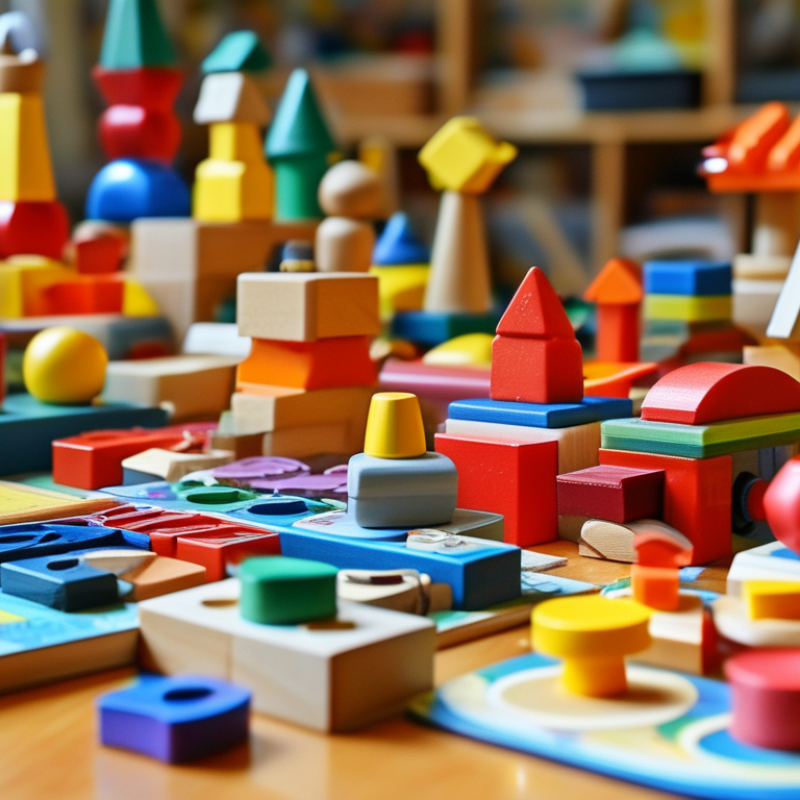
Educational toys play a vital role in developing creativity in children. These toys foster imaginative play by encouraging exploration and experimentation. Hands-on experiences often help children to think outside the box. For example, building blocks allow kids to create various structures, enhancing spatial reasoning. Creating their own worlds requires decision-making skills. These opportunities can lead to unique and innovative ideas.
Moreover, educational toys often include elements that stimulate problem-solving. Puzzles challenge children to find solutions, cultivating critical thinking. Simple tasks can seem easy at first, but as complexity increases, kids must adapt. This progression can reveal how they view challenges. Sometimes, children may become frustrated. This emotional response can lead to valuable lessons about resilience.
Not all educational toys yield the same results. Some may not engage every child effectively. Individual preferences matter greatly. A toy that inspires one child might bore another. Parents should observe their children’s reactions closely. Understanding what sparks their interest can help guide future play choices. Ultimately, the effectiveness of educational toys depends on how they resonate with each unique child.
Educational toys play a vital role in cultivating creativity in children. Notably, toys that encourage open-ended play can significantly inspire imagination. According to a report by the American Academy of Pediatrics, unstructured play leads to improved problem-solving skills and innovative thinking. Toys that promote exploration offer children opportunities to experiment and discover.
One key characteristic of educational toys is versatility. Toys that serve multiple purposes, like building blocks, can engage children in various ways. This flexibility allows kids to explore different concepts and ideas. A research study has shown that children exposed to versatile toys developed more advanced imaginative play scenarios compared to those using conventional toys.
**Tip:** Consider toys that provide various building options. This can enhance creative thinking skills.
Another important aspect is simplicity. Toys that are too complex can overwhelm young minds. In contrast, simple toys foster creativity by allowing children to add their own elements. For example, a plain cardboard box can transform into a castle or a spaceship in a child's imagination.
**Tip:** Look for open-ended toys that inspire children to create their own stories and scenarios.
Educational toys should encourage exploration. They should stimulate curiosity and creativity, fostering a learning environment that empowers children to think outside the box.
The link between playtime and creativity in children is fascinating. Research shows that children who engage in regular play develop enhanced creative skills. Playtime provides them with opportunities to explore ideas, solve problems, and express themselves. These experiences are essential for nurturing imagination.
In many cases, creative abilities flourish when children interact with educational toys. For example, building blocks can inspire innovative thinking. Constructing various structures encourages planning, spatial awareness, and visual thinking. When children use these toys, they encounter challenges that foster resilience and adaptability. However, not all play experiences translate equally into creativity. Limited or overly structured playtime may hinder imaginative exploration.
It is crucial to strike a balance in children’s activities. While educational toys are beneficial, they should not dominate playtime. Unstructured play, such as outdoor exploration, also plays a vital role in developing creativity. The interplay of different types of play creates a rich environment for growth. Encouraging varied experiences can lead to deeper engagement and creativity. Parents and educators should facilitate this balance, allowing children the freedom to explore and create in their unique ways.
Educational toys play a significant role in fostering creativity among children. Research indicates that children engaging with these toys often exhibit higher problem-solving skills. A study by the National Association for the Education of Young Children found that 75% of teachers believe that play with educational toys is essential for cognitive development.
One example is a case in a second-grade classroom where students used building blocks to design structures. These projects sparked discussions about engineering and architecture, demonstrating the toys’ potential to ignite creative thinking.
Another impressive case took place in a kindergarten program focused on art and science. Children used interactive kits to create their own inventions. They crafted a recycling machine from simple materials, and this project not only inspired creativity but also fostered a sense of teamwork. According to a report from the International Society for Technology in Education, 64% of educators observed improved collaboration skills through such hands-on projects. However, some found it challenging to evaluate creativity, as not all projects met the expected standards. This highlights the need for teachers to support creative processes while providing constructive feedback.
Educational toys play a vital role in fostering creativity among children. Experts in child development assert that play-based learning enhances cognitive and emotional growth. A study by the American Academy of Pediatrics indicates that playful interactions significantly boost creative thinking abilities in children aged three to five.
Moreover, hands-on activities encourage problem-solving skills. According to the National Association for the Education of Young Children, 85% of preschool teachers believe that play is crucial for creativity. Engaging with toys that require imagination, such as building blocks or arts and crafts, allows children to explore new ideas. While traditional learning methods focus on rote memorization, play encourages innovation and experimentation.
However, not all educational toys are equally effective. It’s important to select those that challenge children without causing frustration. A balance is needed to stimulate growth while ensuring enjoyment. Educators note that unstructured play often leads to the most creativity. Striking the right balance can be complex, but the potential for enhanced creativity is significant. Embracing this approach may lead to more imaginative, resilient future generations.
: Regular playtime helps children enhance their creative skills. It allows them to explore and express ideas.
Educational toys like building blocks inspire innovative thinking. They encourage planning and spatial awareness.
Yes, limited or overly structured play may hinder imaginative exploration. Children need freedom to create.
Unstructured play, like outdoor exploration, nurtures creativity. It offers diverse experiences that enhance engagement.
Children using educational toys often show higher problem-solving skills. They tackle challenges that build resilience.
Some educators find it tough to assess creativity in projects. Not all projects meet expected standards.
They should facilitate a balance between structured and unstructured play. This allows kids to explore freely.
Yes, hands-on projects improve collaboration. Children learn to work together and share ideas.
Projects like building structures or inventing machines spark creative discussions and teamwork among children.
While beneficial, educational toys shouldn't dominate play. A mix of activities fosters creativity better.
The article "Can Educational Toys Enhance Creativity in Children?" explores the significant role that educational toys play in fostering creative thinking among kids. It highlights key characteristics of these toys that inspire imagination, such as open-ended design and interactive features that promote exploration. Furthermore, the article delves into the statistical correlation between playtime and the development of creative skills, indicating that increased engagement with educational toys can enhance children's imaginative capabilities.
Additionally, case studies illustrate successful creative projects initiated by children using educational toys, showcasing tangible outcomes of play-based learning. Expert opinions further support the argument that interactive and thoughtfully designed toys can educational toys improve creativity by providing children with opportunities to experiment, problem-solve, and think outside the box, ultimately enriching their cognitive development and creative expression.

Bully Toy