In recent years, the role of play in child development has garnered significant attention. Educators and researchers increasingly recognize the importance of educational toys in fostering essential skills. Specifically, the question arises: how do educational toys improve problem solving skills? According to the American Academy of Pediatrics, engaging in play enhances cognitive flexibility and critical thinking among young learners.
Research by the Toy Association shows that 85% of children learn best through play. Educational toys, designed to challenge young minds, facilitate this learning process. These toys often encourage creative problem-solving by presenting obstacles that kids must navigate. For instance, building blocks challenge children to think spatially. Similarly, puzzles require strategic thinking to fit pieces together.
However, the effectiveness of educational toys isn't universal. Factors like age, parental involvement, and toy complexity matter significantly. While many toys claim to enhance skills, parents should reflect on their child's interests and developmental stage before making a purchase. Thus, understanding how educational toys improve problem solving skills is essential in making informed decisions for children's growth.
The Definition of Educational Toys and Their Role in Learning
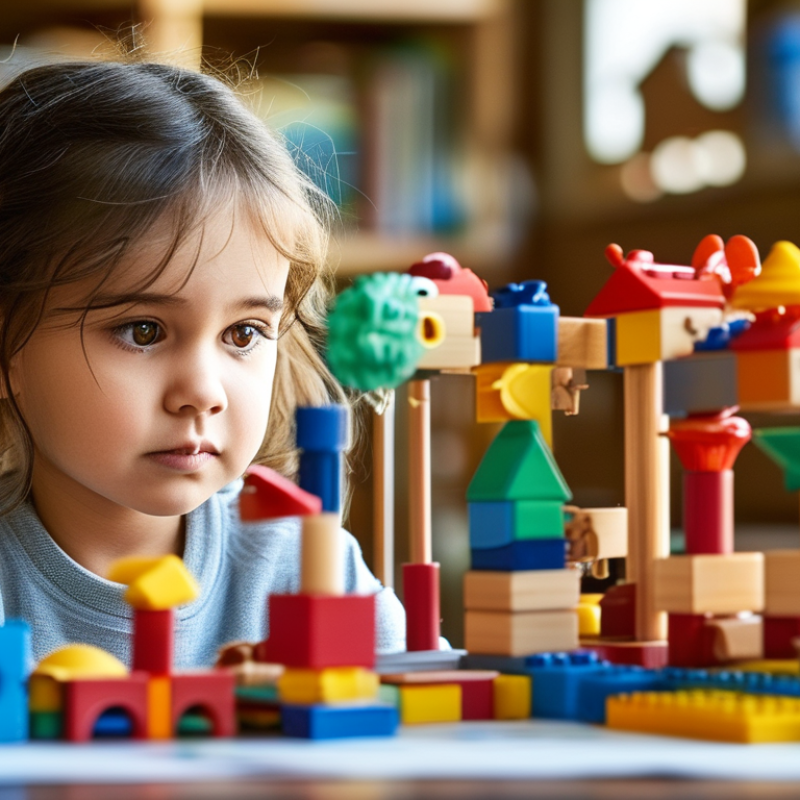
Educational toys are designed to facilitate learning through play. They are more than just simple objects. These toys encourage children to think critically and creatively. When engaging with educational toys, children confront challenges that mirror real-life problems. This interaction fosters the development of essential problem-solving skills.
These toys can include puzzles, building blocks, and strategy games. Each of these types requires children to plan, test solutions, and learn from failures. For instance, when constructing a tower with blocks, a child must balance the pieces carefully. This activity teaches them about physics and gravity while prompting them to overcome obstacles. The hands-on experience is vital; it makes learning tangible and memorable.
However, not all experiences with educational toys are straightforward. Some children may struggle to grasp concepts initially. They might feel frustration instead of joy during play. This feeling can lead to a reluctance to try again. It is crucial for caregivers to encourage persistence and patience. Reflecting on these moments can provide insights into a child’s thought process and learning style.
Types of Problem Solving Skills Fostered by Educational Toys
Educational toys serve as powerful tools for enhancing various problem-solving skills in children. These toys encourage critical thinking and adaptability. Children engage with puzzles, building blocks, and role-playing games. Each activity presents challenges requiring them to analyze, predict, and reflect on outcomes. For example, assembling a complex puzzle helps kids understand spatial relationships. They learn to visualize and strategize while overcoming obstacles.
Another important aspect is creativity. Many educational toys promote open-ended play. This nurtures the ability to think outside the box. Through imaginative scenarios, children learn to approach problems from different angles. A simple box can become a spaceship or a treasure chest, depending on a child's perspective. Such experiences allow for experimentation and innovation.
Moreover, teamwork is fostered through group activities. When children collaborate, they negotiate solutions and learn to compromise. This teaches them to listen to others while expressing their thoughts. However, not every problem is solved easily. Frustration can occur, highlighting the need for patience and resilience. Overall, educational toys provide a multi-faceted environment for children to develop essential problem-solving skills.
Mechanisms Through Which Educational Toys Enhance Problem Solving Skills
Educational toys play a crucial role in developing problem-solving skills in children. Research from the American Educational Research Association indicates that hands-on learning experiences can enhance cognitive abilities. Engaging with these toys encourages children to explore, manipulate, and learn from their environment actively.
These toys often involve puzzles or building sets. Such activities require critical thinking and strategy. A report by the National Association for the Education of Young Children states that 80% of children showed improved problem-solving skills after regular interactions with educational toys. Through trial and error, they learn persistence and resilience. They tackle challenges, adapting their strategies as needed.
Moreover, these toys provide a safe space for failure. Children can experiment without real-world consequences. They practice analytical thinking by assessing what works versus what doesn't. This reflection is vital for cognitive growth. However, it’s essential to choose toys that are appropriate for their developmental stage. Some educational toys may be too complex or simplistic, hindering learning rather than enhancing it.
Impact of Educational Toys on Problem Solving Skills Development
Examples of Effective Educational Toys and Their Impact on Skill Development
Educational toys play a significant role in enhancing problem-solving skills among children. For instance, building blocks encourage spatial awareness and creativity. As children assemble different structures, they learn to think critically about balance and stability. The trial-and-error process involved can sometimes be frustrating, but it also fosters resilience. When a child sees a tower tumble, they are prompted to rethink their approach.
Puzzle games are another effective tool. They often require children to recognize patterns and devise strategies for completion. This can lead to moments of confusion, as some puzzles may seem insurmountable at first. However, overcoming these challenges boosts confidence and sharpens cognitive skills. By piecing together a puzzle, a child learns persistence and the importance of breaking down complex problems into manageable parts.
Another example is STEM-based toys that introduce scientific concepts. These toys often involve experiments or coding games. Children are encouraged to hypothesize and test their theories. Although mistakes are common, they are essential for learning. The process allows kids to develop a deeper understanding of concepts while honing their analytical skills. Ultimately, educational toys offer hands-on experiences that are invaluable for skill growth.
Research Findings on Educational Toys and Problem Solving Outcomes
Recent studies highlight the significant impact of educational toys on children's
problem-solving skills. A report by the American Academy of Pediatrics indicates that engaging with these toys enhances
cognitive development by fostering critical thinking. The research shows that children who play with educational toys demonstrate a
23% increase in problem-solving abilities during early childhood. This is crucial, as the ability to solve problems is
foundational for future academic success.
Moreover, a study published in the Journal of Child Development found that interactive toys encourage
collaboration among peers. Such interaction helps children learn to share ideas and tackle challenges together. This
social dimension contributes to a deeper understanding of problem-solving.
Children who engage in play-based activities exhibit stronger memory retention and creativity. Interestingly, the same study revealed that
40% of children reported feeling more confident after collaborative play sessions.
However, not all educational toys yield the same benefits. It’s essential to choose the right type based on a child's specific needs. Some toys can be
overly complex or simplistic, leading to frustration or disengagement. Adapting to each child’s learning style is key. Misalignment
between a child's skills and toy challenge can inhibit growth. Parents and educators should focus on finding a balance between
fun and developmental value.
FAQS
: Educational toys facilitate learning through play. They foster critical and creative thinking in children.
They present challenges that mirror real-life problems. Children learn to think critically and develop problem-solving skills.
Not every child has the same experience. Some may struggle or feel frustration while learning through these toys.
Puzzles, building blocks, and strategy games are examples. Each type encourages planning and testing of solutions.
It makes learning tangible and memorable. Children grasp complex concepts better through physical interaction.
Studies show a 23% increase in problem-solving abilities. This foundation supports future academic success.
Interactive toys promote collaboration among peers. Children learn to share ideas and tackle challenges together.
It's important to match toys to a child's specific needs. The right challenge level aids in growth and engagement.
Children may feel frustrated or lose interest. Misalignment can inhibit learning and discourage further attempts.
Encouraging persistence and patience is vital. Reflecting on challenges can offer insights into a child’s learning style.
Conclusion
Educational toys play a crucial role in enhancing children's learning by fostering various problem-solving skills. These toys are designed to stimulate cognitive development, encouraging creativity, critical thinking, and the ability to tackle challenges. Different types of problem-solving skills, such as analytical thinking and spatial reasoning, can be nurtured through engaging with educational toys that promote exploration and experimentation.
Research indicates that educational toys enhance problem-solving abilities through mechanisms like hands-on interaction and imaginative play. By providing opportunities for trial and error, these toys encourage children to devise solutions and think independently. Effective educational toys demonstrate a significant impact on skill development, reaffirming the question of how do educational toys improve problem-solving skills. Overall, they serve as vital tools in equipping children with necessary skills for future learning and real-world challenges.

 Bully Toy