China Top 10 Educational Toys for Social Development?

Time:2026-09-29 Author:Sienna
0%

China Top 10 Educational Toys for Social Development? This guide examines how thoughtfully designed toys can help children communicate, cooperate, and manage everyday emotions. It focuses on Chinese educational toys that encourage shared play, rather than products that simply flash, speak, or reward speed.

A useful question shapes this discussion: how do educational toys support social development? Child-development specialist Claire Lerner, LCSW, has said, “The best toys are those that support parents and children playing, pretending, and interacting together.” Her observation highlights an important standard. A cooperative building set can turn separate blocks into a shared bridge. A role-play kitchen can invite children to negotiate who cooks, serves, or cleans. A board game can make waiting visible, with hands resting beside the board and disappointment becoming part of learning.

The strongest toys create conversation. They also leave room for children to change the rules. That flexibility matters. In real classrooms and homes, one toy rarely suits every child, culture, or developmental stage. Some children speak confidently; others participate through gestures, drawing, or quiet observation. A ranking can therefore guide adults, but it cannot replace careful watching.

This introduction considers ten options through practical social-development criteria: cooperation, turn-taking, empathy, communication, problem-solving, and inclusive play. Materials, age suitability, safety information, and adult involvement also deserve attention. A toy may look educational yet produce isolated, repetitive play. That is an uncomfortable possibility. Good choices require reflection, not only attractive packaging or impressive claims.
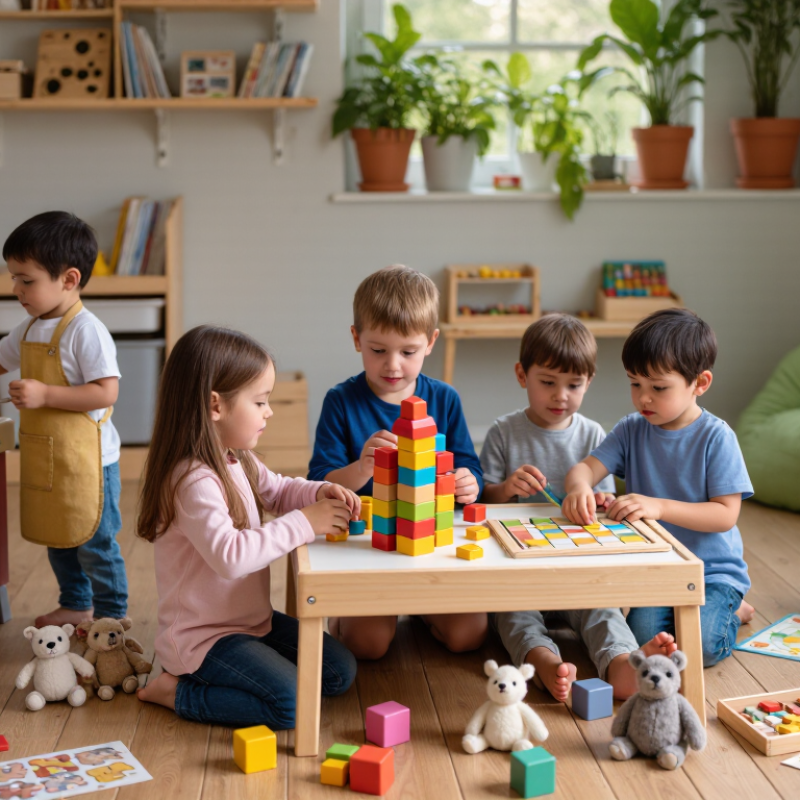
China Top 10 Educational Toys for Social Development?

What Social Development Means in Educational Play

China’s top ten educational toys for social development should be judged by interaction, not noise or novelty. Social development means learning to communicate, cooperate, negotiate, and respond to feelings during play. A child handing over a wooden piece practices turn-taking. Another child explaining a puppet’s worry practices empathy. These small actions matter.

The OECD’s Survey on Social and Emotional Skills 2023 links skills such as cooperation, empathy, and emotional control with stronger well-being and school engagement. The UNICEF and LEGO Foundation Learning through Play report also describes play as a way to build communication, problem-solving, and social skills. Based on these findings, useful categories include cooperative board games, role-play sets, puppets, building blocks, shared puzzles, pretend shops, art kits, musical instruments, science kits, and outdoor activity toys. Each category creates a social task. Children may plan a tower, divide materials, perform a short story, or repair a failed experiment.

The adult’s role is important. Ask, “How can everyone join?” rather than solving every disagreement. Keep the rules visible. Use three figures, four cups, and one shared goal. Small groups often work better than crowded playrooms. Still, not every toy produces cooperation automatically. I have seen attractive games become silent competitions. That is a useful warning. Designers and caregivers should observe facial expressions, waiting time, and who gets ignored. Social development is uneven, sometimes messy, and rarely visible in one afternoon.

10 Educational Play Types and Social Development

How many of CASEL’s five social-emotional competency areas each play type can give children a chance to practice.

Cooperative play can offer opportunities to practice skills such as relationship-building, social awareness, and responsible decision-making. Scores are an illustrative mapping of typical play features to CASEL’s five competency areas—not measured outcomes or a ranking of toy effectiveness. The experience depends on the activity and how children play.

How to Choose Educational Toys for Social Skills

Choosing educational toys for social skills requires more than counting pieces or learning functions. In China, families may compare ten popular categories. The better choice depends on age, language, temperament, and play setting. Look for toys that invite two or more children to negotiate, share materials, or solve a visible problem together. Pretend food stalls, cooperative puzzles, building sets, role-play figures, and simple board games can create natural conversation. Open-ended play matters.

A useful toy has clear but flexible rules. Children should understand the basic task, then change roles or invent new rules. Watch for turn-taking, listening, eye contact, and repair after disagreement. A small kitchen set might encourage one child to serve while another orders, counts, and asks politely. Choose durable, washable materials with smooth edges and readable instructions. Check age guidance carefully, especially for small parts. Adults can model phrases such as “Can I join?” and “Let’s try another way.” Avoid toys that reward only speed or individual winning. They may increase conflict in some groups.

My own selection mistake was choosing a complex game because it looked educational. The children spent ten minutes arguing over instructions. Simpler pieces worked better. Still, no toy guarantees social growth. Observe the child, play nearby, and adjust the challenge. A quiet child may need a partner, not a louder toy. A confident child may need slower turn limits. Review the toy after several sessions, because interests and social needs change.

Ten Educational Toys Popular in China for Social Development

In Chinese homes and classrooms, ten educational toys often support social development: cooperative board games, building blocks, role-play sets, puppets, puzzles, emotion cards, clay, musical instruments, train sets, and soft balls. These toys create small social problems for children to solve. A board game teaches turn-taking and patience. Building blocks encourage shared planning. Role-play sets help children practice asking, listening, and negotiating. Puppets make difficult feelings easier to discuss. Emotion cards give shy children useful words. Puzzles reward cooperation instead of speed. Clay and music invite creative group work. Train sets and balls encourage shared rules and movement. Child-development educators value these activities because children learn through repeated interaction, not lectures.

Tips: Choose toys with open-ended play. Watch how children share materials. Ask, “What could you try together?” Avoid correcting every disagreement. Step in when play becomes unsafe or unfair. Let children repair small conflicts themselves.

Age guidance still matters. Check small parts for younger children, and inspect materials regularly. Adult supervision is sensible during group play. In my experience, even a simple ball can teach more social skills than an expensive set. Yet this is not always true. Some children prefer quiet puzzles before joining a group. Respecting that pace builds trust. A toy should invite conversation, not force it. Rotate ten options, but offer only a few at one time. Too many choices can create conflict.imuhamed

Social Skills Encouraged by Different Types of Toys

China Top 10 Educational Toys for Social Development

Social Skills Encouraged by Different Types of Toys

Role-play sets help children practice greetings, turn-taking, and polite requests. A toy kitchen can become a busy restaurant. One child serves pretend food, while another waits for a table. These simple roles encourage conversation and negotiation. Puppets also support emotional expression. Children may let a puppet apologize when direct speaking feels difficult.

Building blocks and cooperative puzzles create shared goals. Children must exchange pieces, explain ideas, and accept different solutions. Board games teach patience, rule-following, and managing disappointment. The pause before a turn matters. It gives children time to listen. Art materials can encourage quieter children to join group activities. Two children may paint one paper road, learning to share space and tools.

Outdoor movement toys develop cooperation through action. A soft ball encourages passing, cheering, and gentle coordination. Musical toys invite children to follow rhythms together. In my experience, open-ended toys often create richer conversations than toys with one fixed answer. However, not every child joins immediately. Some need adult support, clearer rules, or a smaller group. I have also seen adults interfere too quickly. That can solve conflicts, but it may remove valuable practice. The best choice depends on age, temperament, safety, and cultural context. A toy is only a starting point. Children build social skills through repeated play, patient guidance, and real interaction.

How Children Can Use Toys to Practice Social Interaction

China Top 10 Educational Toys for Social Development?

How Children Can Use Toys to Practice Social Interaction

The best social-development toys invite children to act together, not simply press buttons alone. Cooperative board games, puppets, role-play sets, building blocks, emotion cards, pretend shops, musical instruments, and collaborative puzzles can create useful social moments. Children practice waiting, sharing materials, reading facial expressions, solving disagreements, and explaining ideas. A simple puppet can ask, May I join? A pretend shop can teach greetings, turn-taking, and polite refusal.

The 2016 Lancet Series on Early Childhood Development estimated that 250 million children in low- and middle-income countries risked missing their developmental potential. The WHO, UNICEF, and World Bank’s 2018 Nurturing Care Framework also identifies responsive interaction as essential for healthy development. Toys support this process, but they do not replace warm adult guidance. Adults can model calm language, then step back. Your turn after mine works better than constant correction. Keep play open-ended.

A cooperative puzzle may fail. That is useful. Children can notice frustration, repair a mistake, and try again. Adults should avoid solving every conflict too quickly. Some children need visual turn cards, shorter games, or quieter settings. Safety also matters: choose age-appropriate pieces, inspect damaged parts, and supervise younger children. Research supports shared play, yet the evidence does not mean every toy produces social skills automatically. The interaction around the toy usually matters more than the toy itself.

FAQS

What makes a toy useful for social development?

It gives children a reason to interact. They might share blocks, plan a tower, or agree on a game rule.

Which toys encourage children to cooperate?

Cooperative games, shared puzzles, building blocks, clay, and train sets can invite teamwork. The play matters more than the toy.

How can pretend play help children communicate?

A pretend shop lets children practice greetings, requests, and taking turns. A puppet can make tricky feelings easier to discuss.

What can adults do during group play?

Ask, “How can everyone join?” Keep the rules visible, then give children room to solve small disagreements. It can feel awkward.

Do toys automatically teach social skills?

No. Some games turn into quiet competitions, even when they look cooperative. Watch who speaks, waits, or gets left out.

How can shy children join in?

Offer a quieter activity, such as a puzzle, or use visual turn cards. Joining slowly is still joining.

How many toys should children use at once?

Offer a few choices, not a crowded room of options. Three figures, four cups, and one shared goal may be enough.

What safety checks matter during play?

Choose age-appropriate pieces, inspect damaged parts, and supervise younger children. Small pieces need extra attention.

What if a game goes wrong?

Pause and let children notice the problem. They can try again, though adults may need to step in if play becomes unsafe or unfair.

Conclusion

This article explores how educational toys can help children build social confidence, communication, empathy, and cooperation through meaningful play. It explains what social development means in early learning and answers the question, “how do educational toys support social development?” The discussion focuses on choosing toys that encourage sharing, turn-taking, problem-solving, emotional expression, and teamwork rather than passive entertainment.

It also introduces ten types of educational toys commonly enjoyed by children in China, including cooperative board games, role-play sets, building materials, puzzles, creative art tools, storytelling toys, and group activity kits. Each type supports different social skills and offers opportunities for children to practice listening, negotiating, following rules, expressing ideas, and resolving small disagreements. With thoughtful guidance from adults, children can use these toys in pairs or groups to develop respectful interaction, strengthen friendships, and become more confident participants in everyday social situations.

Sienna

Sienna

Sienna is a skilled marketing professional with a deep expertise in our company’s core products and services. With a passion for innovation and detail, she plays a pivotal role in crafting insightful blog posts that not only highlight the unique features of our offerings but also provide valuable......